Moving Company Near Marysville: How to Compare Service Levels the Right Way
Choosing a mover around Marysville is not just about who can haul a couch from point A to point B. The real difference shows up in the details, the planning, and how a crew prevents small problems from becoming expensive ones. If you compare only on an hourly rate, you risk paying more in overtime, damage, or delays. Service level tells you how a company anticipates, coordinates, and executes the work. That is what you should compare, and you can do it without guessing.
What service level really means in Marysville and Snohomish County
Service level sits at the intersection of staffing, training, equipment, and project management. In practice, it is the difference between a truck arriving with a full set of floor runners, door jamb protectors, and a tool kit for disassembling a sectional, and a truck that shows up with two dollies and a roll of tape hoping the job is simple. The Marysville area adds its own wrinkles, like managing hills in Mukilteo, tight townhouse turns in Mill Creek, and the traffic rhythms between King and Snohomish counties. A good team knows how to time loading and route choices so you are not burning time in a mid-day slowdown on I‑5.
When you compare companies, look for consistent systems. How they inventory, wrap, stage, and load will tell you more than any marketing line about care and professionalism. You want specifics you can verify, not general assurances.
A Marysville benchmark: scope first, truck second
On local moves in and around Marysville, take note of which estimator starts with scope. The best ones ask about stairs, parking distance to the door, elevator windows, HOA rules, and the size of the carry path inside a split-level home. If they skip that and push for a date, expect change orders and clock creep later. Service level begins with a clean scope, because that is how a crew shows up ready for your exact layout.
For example, moving into a townhome in Lake Stevens with a tight 180‑degree turn on the landing requires a different plan than a wide hallway rambler in Arlington. The right company stages the longest pieces near the front of the load, pads and wraps before stairs, and assigns an inside lead who manages corner protection. That process prevents wall rub and saves time. A weaker crew drags, repositions, and tries three angles before realizing the legs should have come off the couch.
Where “full-service” often gets misread
“Full-service” gets thrown around. In Snohomish County, it can range from a proper pack, load, transport, and setup to little more than loading wrapped furniture and placing boxes in rooms. You need a plain-English breakdown. At minimum, ask what full-service can include for local movers in Snohomish County. High-level options often include pack-only days, partial packing for kitchens and fragile items, custom crating for large mirrors or art, debris haul-away, and temporary storage for overlapping leases or short closings.
I see partial packing near Marysville used well when a family can handle bedrooms and books but wants professional hands for the kitchen, glass decor, and electronics. Good crews bring dish barrels for plates, foam sleeves for glass, and proper wire management for TVs so the cables arrive coiled and labeled. That is service level, not fluff.
How to compare packing standards without guessing
You do not need to be an expert packer to judge packing standards. Focus on materials and method. Ask what grade of boxes they use, how they wrap soft goods, and how they seal and label. During the estimate, a prepared company will describe how dish packs, glass packs, and wardrobe boxes are used, how they float wrapped items inside boxes with crumpled paper void fill, and how they top off boxes to avoid crushing.
A small detail tells you a lot. Crews that label on two sides and the top are thinking ahead about warehouse storage and garage stacking. Teams that use a single top label often lose time rotating stacks to find rooms on delivery. If a company mentions a color or zone system for kitchens, bedrooms, and office boxes, that is another sign of mature process.
A Perfect Mover Moving and Storage Service: how a local team grades service
A Perfect Mover Moving and Storage Service builds estimates around the parts of a move that slow families down in this region. On Marysville WA Moving and Storage, the tricky part is timing storage around closing dates when an escrow shift leaves you with a three to seven day gap. The team plans a two-phase move, loads to storage vaults, and stages the final delivery on your recorded day. It reads simple, yet the details matter. Vault sizes, aisle access, and how they index your vault labels determine whether your bed frames get delivered first or buried behind seasonal bins.
I have seen their planners pull up a weekend timeline that makes sense for office moves as well. Friday afternoon pack and disconnect, Saturday load and transport, Sunday placement and IT hook-up. That is a How to Move an Office Over a Weekend plan that limits downtime. They also speak candidly about constraints, like elevator holds in downtown Everett or restricted dock hours in Bellevue. Strong service level means putting those realities on paper before you commit.
The three clocks that drive real cost
Great moving days are choreographed around three clocks: load time, drive time, and delivery setup time. You want a mover that explains which clock dominates your move and how to control it.
For a split-level home in Marysville, load time often dominates. Staging boxes by floor, pre-wrapping the largest furniture near the door, and disassembling beds in advance trims that clock. Driving across the Seattle metro, drive time is the pacing item. The company should propose a route plan that bypasses the worst corridors or adjusts start time to miss the squeeze. Delivery setup time balloons when labeling is vague. Clear room names, “front-of-garage” for essentials, and desks disassembled with hardware bagged simplify the last stage.
Service level shows up when the estimator ties choices to those clocks. Do they recommend an extra packer for half a day to keep load time on a safe track, or do they accept risk that becomes overtime later?
Equipment and protection: what you should actually see
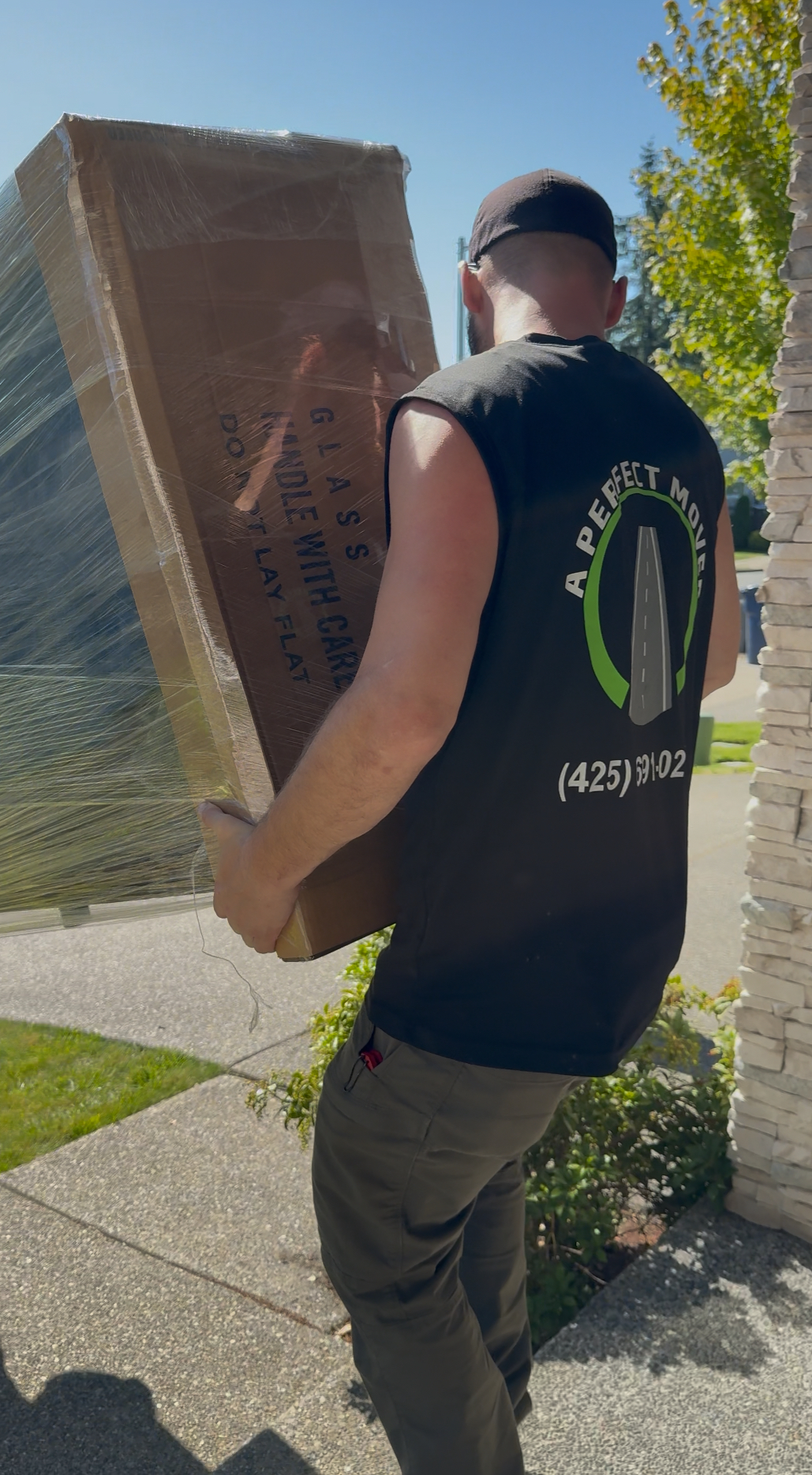
On move day, a high-service crew lays floors and guards corners before anything moves. They carry neoprene or ram board floor protection, door jamb protectors, and staged pads. The team should wrap furniture in the home, not at the truck. Wrapping on the driveway leads to scratches and drops. Ask if they carry mattress bags that seal, sofa stretch wrap, and proper tie-downs. It is not nitpicking; Washington weather punishes shortcuts. How to Avoid Water Damage in Boxes starts with keeping cardboard off wet pavement and moving through a rain-proof path with tarps and quick staging.
For electronics, ask how they protect monitors and TVs. You want screens vertical, padded, and kept away from weight. For long distance, the standard should shift to extra strapping and edge guards. How to Protect Furniture During Long Distance Shipping is not the same as a local hop, and a company that treats both the same will lose points.
Service level for commercial moves, without the buzzwords
Commercial moves in Snohomish County have a simple scoreboard: can you get a team out on Monday without downtime. That requires label discipline and a map. The best Office Move Checklist starts with department color tags, desk numbers that match floor plans, and PC bag kits that gather power bricks, dongles, and accessories for each station. On moving day, each workstation pulls as a unit and lands as a unit. If your IT director wants serial numbers tracked, find out if the mover can inventory monitors and servers on a barcode sheet, and how they handle static-safe transport for sensitive equipment.
Medical office moves raise the stakes. Records chain-of-custody, equipment calibration, and vendor coordination for imaging machines must be built into the plan. A mover should admit when they need a third-party technician for de-install and re-install. That honesty is a service level marker in itself.
The Marysville storage question: handling the gap between keys
Short closings and builder delays are common. Timing storage around closing dates in Marysville usually requires vault storage, not an open warehouse. The vault method allows sealed, labeled containers with your name, which protects items from commingling and makes retrieval predictable.
When comparing companies, ask how they index vaults. Some teams create an aisle map with your last name and vault count, then attach a box manifest to each vault. That makes midday access possible if you need school supplies or work files during a delay. If they say “we will find it,” that is not a plan. Storage Organization that works uses labeling on two sides, aisle space you can actually walk, and front-of-unit essentials kept near the roll-up, not behind dressers and totes.
Partial packing: when it saves money and when it does not
Partial packing makes sense when you have time for clothes, books, and linens, but not for glass and electronics. Kitchens, dining rooms, and decor tend to eat hours. Packing Services Near Marysville that shine carve off the most fragile rooms and leave straightforward spaces for you. The risk of “I will pack everything” shows up on move day when boxes are only three-quarters full or unsealed. Those stacks collapse, and crews have to repack or double-handle. If your schedule is tight, let the pros handle the top five fragile zones and you finish the bedrooms. You shift effort to where it reduces damage and saves time.
Comparing estimates like a pro
Shoppers often line up three quotes and pick the middle. That is not a comparison, that is hope. Read the exclusions and notes. A serious estimate spells out travel time, stair carries, long carries from the truck to your door, and whether plastic stretch wrap, mattress bags, and TV boxes are included or billed as materials. It should also explain how overtime is handled if the job runs over. With that detail, you can compare apples to apples.
A case from a recent Marysville to Bothell move helps here. Two estimates were lower by a few hundred dollars but excluded parking management and assumed a 50‑foot carry. The condo actually required a 200‑foot run from the loading zone, and the building needed protective mats and wall guards. The higher bid accounted for both. On move day, the lower bids would have added materials, time, and possibly a fine for uncovered walls. The higher estimate turned out to be the true number.
A Perfect Mover Moving and Storage Service: how the crew sets the pace
At A Perfect Mover Moving and Storage Service, the lead runs a quick “walk and assign” when the truck arrives. They set zones, call out disassembly tasks, tag fragile pieces, and stage a soft route with floor runners. It takes five to eight minutes and saves half an hour of wandering later. On a rainy morning in Everett, I watched them rig a tarp tunnel from the garage to the truck, with a dry staging table for electronics and hardware bags. That is not expensive gear, that is practice. For families trying to keep a newborn asleep or pets contained, that small discipline keeps the home calmer.
The same playbook helps when moving into a split-level. They load basement items last if those rooms will be staged first in the new home, or reverse the order if the primary suite needs priority. Those decisions show a company is thinking about the first night, not just the last box.
Routes, timing, and the Seattle metro shuffle
Seattle Metro Moving changes character by hour. If your move crosses into King County, ask your mover to walk you through start time and route options. Northbound late morning works, southbound early start works, and weekend patterns change with events. A mover that shrugs and picks 9 a.m. every time is not optimizing your day. For Lynnwood and Edmonds corridors, loading before breakfast beats a two-hour crawl later. For Bellevue or Redmond deliveries, a Saturday morning run can save you a third of your time budget.
For apartments, the planner should call property managers for elevator reservations and loading dock rules. How to Handle a Move With Limited Elevator Time takes a different crew shape. You want a runner team, an elevator loader, and a truck loader who never leaves the dock. That rhythm squeezes the most out of a two-hour window.
Safety and risk: where the right questions keep you out of trouble
Ask about certificates of insurance, crew background checks, and claims process specifics. Do they repair on their own dime or steer you to file a claim with long delays. A company that documents condition at pickup, protects surfaces, and trains crews on ladder use, lifting, and dolly technique prevents the claims conversation in the first place. This is less glamorous than new trucks, but it sets the ceiling for how bad a bad day can get.
At a practical level, prevent box overload by keeping weight under 40 to 50 pounds per box. Overweight book boxes blow out seams and slow the carry. A crew will rarely say no to a heavy box; they will just take more time. You control that variable, and a high-service company will coach you on it.
A short, real-world comparison checklist
Use this to sort service levels quickly. Keep it to five items so you can get clear answers on a short call.
- Scope depth: stairs, parking distance, elevator windows, HOA rules, carry path, and item list covered in writing. Protection plan: floor runners, door jamb guards, wrap inside the home, mattress bags, weather plan. Packing clarity: what full-service includes, partial packing options, materials grade, labeling method. Scheduling and route: start time justified by route, elevator reservations, dock rules, and a backup plan. Storage method: vaults vs open floor, labeling index, access policy, timing around closings documented.
If a company struggles to answer these cleanly, you will feel that wobble on move day.
Specialty items and edge cases that reveal maturity
Ask how they handle safes, pianos adjacent to living rooms, or oversized appliances. You are not trying to trap anyone, you want to hear the sequence and the gear. Moving a large safe area requires floor protection, stair assessment, and sometimes a third mover for a controlled descent. A seattle professional movers piano-adjacent setup often means a bench, lamp, and fragile decor need to be packed before the main piece moves. On warehouse and light industrial moves, pallets and racks require measured disassembly and a route plan that keeps egress clear for forklifts. If the answer is “we do it all the time,” press for the steps. Mature crews talk about straps, sliders, and spotters as naturally as they talk about boxes.
For apartments and condos, a parking plan with cones, signage, and neighbor coordination matters. Cities like Kirkland and Bellevue can be particular about curb space. A mover that can provide temporary signs or instruct you on how to request them from the city saves a scramble. The first 15 minutes of a move set the tone. If your truck is circling the block, your schedule shrinks.
Weather and Washington realities
Rain is a constant variable in this region. The difference between a soggy mess and a smooth day is a rain-proof moving day setup. That looks like a tarp line, staging near the door, towels for hand drying, and fast-wrap at the threshold. Boxes should not rest on wet ground, and any soft goods should be bagged before they leave the room. When comparing service levels, ask what changes when it rains. If the company says “nothing,” that is not a plan. Small adjustments keep water out of boxes and away from hardwood floors.
For long distance moves, moisture control extends to dehumidifiers in storage, mattress bags taped, and furniture wrapped tight with breathable pads under the plastic. How to Pack Clothing for Long Distance Moves Without Mildew Smells is a real question here. Leaving clothes in plastic bins that sweat creates odor. Wardrobe boxes and clean paper do better for longer periods.
When a two-phase move makes sense
Families doing remodels or moving out and back in after new floors often benefit from a two-phase move. The best two-phase move plan does not treat the storage run as an afterthought. Stage items so “back-in-first” furniture sits at the front of the vault or storage unit. Label the unit interior with “front-of-unit essentials,” and keep aisles you can actually walk. That is Storage Organization you feel on delivery day when the items you want first come off first.
In Marysville and nearby neighborhoods, the timeline often looks like this: pack and load on Thursday, floors refinished Friday through Sunday, light curing Monday, and move back in Tuesday. That plan only works if you accepted a few days of storage and your mover aligned crew availability around it. A high-service company will recommend it and set your expectation early.
The second list you might actually use: five questions that separate the pros
- What changes in your plan if my closing moves by three days. How will you protect new floors, paint, and trim on move-in at the new home. Can you show me an example of your labeling system on a recent job. How do you handle IT equipment moving, especially monitors and cable kits. If my building limits elevator time, how do you staff for that window.
Listen for specifics. A vague “we can handle it” sounds friendly and costs you later. A team that explains the steps is a team that will follow them.
A Perfect Mover Moving and Storage Service: lessons from the field
One Marysville family had a short closing window, a new baby, and a townhome with tight turns. The plan from A Perfect Mover Moving and Storage Service called for a partial pack focused on the kitchen and decor on Wednesday, load on Thursday morning before traffic, a one-night vault storage, and delivery Friday afternoon right after recording. The crew brought corner guards, extra narrow dollies for the stair turns, and a labeling scheme that kept nursery boxes on the truck edge. The mother could set up a crib first while the team worked through living room placement. That is what service level feels like: the first night set up the way you want it, without a negotiation with chaos.
Another project, a small office in Everett, used their Office Move Checklist with desks tagged by department, PCs bagged with power bricks and HDMI adapters, and server transport in anti-static wrap within a dedicated bin. The building limited elevator time to two hours per move. They ran a tight elevator rotation and finished inside the window, which prevented extra fees and Monday delays. Good paperwork and calm loading do not look impressive on Instagram, but they deliver the result that matters.
Final thought: compare plans, not slogans
A service level is visible in the plan on paper and in the kit that arrives at your curb. Ask for scope detail. Ask how they pack the fragile rooms. Ask for the rain plan and the storage indexing method. Ask how their crew leads set pace, how they label, and how they protect floors and corners. Then weigh the estimate that shows those answers against the one that promises a low hourly rate with no detail.
Marysville and the broader Snohomish County corridor reward movers who think. The hills, the weather, the traffic, and the building rules expose shortcuts quickly. Compare on the parts of the job that actually control cost and stress. The right company will not just move your things. They will move your day from guessing to predictable.